
3 PEAKS OF ITALIAN ALPINES
The Tre Cime di Lavaredo, or "Three Peaks of Lavaredo," stand as the definitive symbol of the Italian Dolomites and are arguably the most photographed mountain group in the Alps. Situated within the Tre Cime Natural Park and designated as a UNESCO World Heritage site since 2009, these three imposing limestone obelisks represent a natural masterpiece of geological sculpture. For travellers visiting Auronzo di Cadore, these peaks are the primary attraction, drawing thousands of hikers and climbers each year who come to witness their sheer vertical walls and dramatic silhouettes.
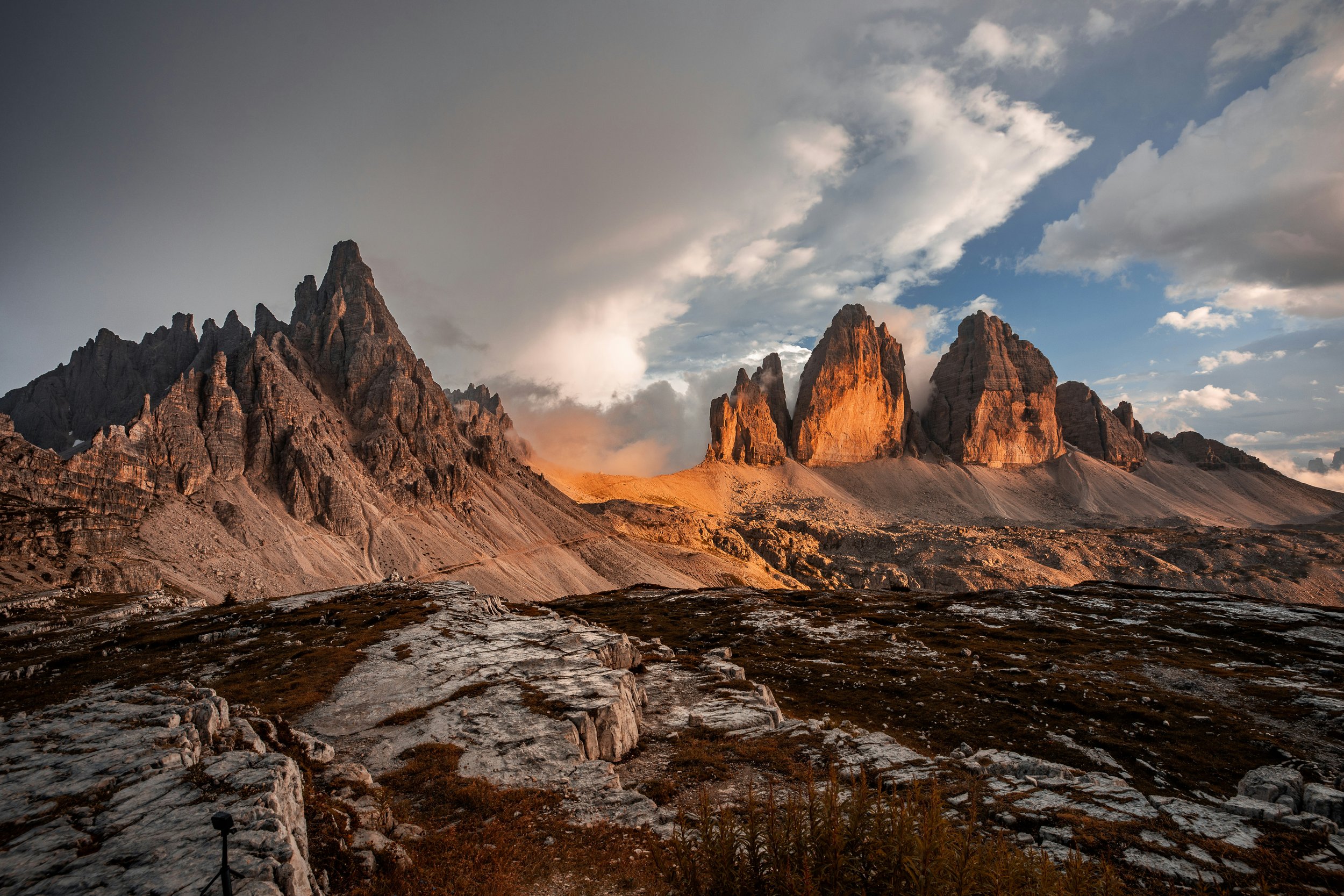
Photo by Alessio Furlan
The group is composed of three distinct giants: Cima Grande (the Big Peak) reaching 2,999 meters, Cima Ovest (the West Peak) at 2,973 meters, and Cima Piccola (the Little Peak) at 2,857 meters. Their unique formation is the result of millions of years of erosion on Dolomite rock, creating an aesthetic that appears almost man-made in its precision. While they are a formidable challenge for professional climbers, their base is surprisingly accessible, allowing even casual visitors to experience the awe-inspiring scale of the peaks from various vantage points.
History and mountaineering culture are deeply woven into the landscape of the Tre Cime. The "Golden Age" of mountaineering in the region began in 1869 when the famous Viennese climber Paul Grohmann became the first to conquer Cima Grande. Beyond the sport, the area carries the weight of history as a former front line during the First World War. Nearby Monte Piana serves as an open-air museum, where visitors can still see restored trenches and tunnels that tell the story of the soldiers who once lived and fought in these high-altitude conditions.
For most visitors, the highlight of a trip to the Tre Cime is the classic loop trail. This 10-kilometre circuit is relatively accessible, featuring a modest altitude gain of approximately 400 meters and taking about three to four hours to complete. Starting from Rifugio Auronzo, the path leads hikers around the peaks, offering ever-changing perspectives. The most iconic view is found near Rifugio Locatelli, where the northern faces of the three towers appear in a perfectly aligned, vertical row, creating a sight that remains etched in the memory of every traveller.
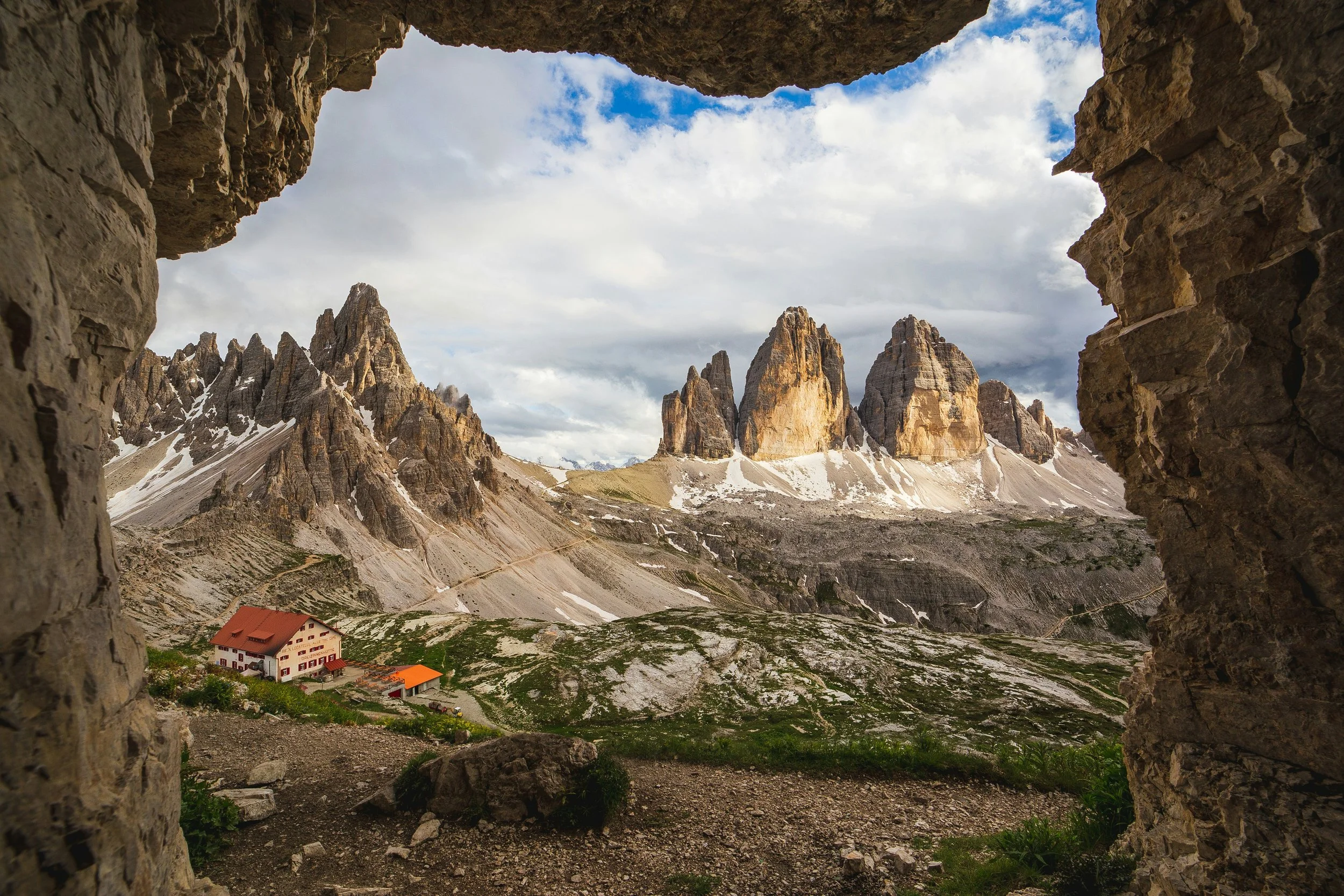
Photo by Nikita Krassiouk
The experience of the Tre Cime is complemented by the warm hospitality of the local "rifugi," or mountain huts. Rifugio Auronzo, Rifugio Lavaredo, and the world-renowned Rifugio Locatelli serve as essential waypoints where hikers can rest and enjoy traditional Ladin and South Tyrolean cuisine. These huts offer more than just food and shelter; they provide a cosy mountain atmosphere where visitors can soak in the panoramic views over a plate of local speck or a warm bowl of canederli, often watching the sunset turn the peaks into a fiery red.
Planning a visit requires some preparation, particularly regarding access and seasonality. The best time to visit is from late June to late September when the trails are clear of snow, and the huts are fully operational. Access is typically via a toll road starting near Misurina, which leads to the parking area at Rifugio Auronzo. Since 2025, a new online reservation system has been implemented to manage the high volume of traffic and protect the delicate Alpine environment. Travellers are encouraged to book their parking spots or shuttle bus tickets in advance to ensure entry.
Whether you are an experienced mountaineer or a family looking for a scenic stroll, the Tre Cime di Lavaredo offer a profound connection to nature. The combination of easy accessibility and high-altitude drama makes this corner of the Dolomites a must-see destination. As the sun sets and the light plays across the pale rock, it becomes clear why these three peaks are considered the heart of the mountains, a place where history, sport, and natural beauty converge spectacularly.